Tuesday, May 12

Broadcasting Authority Of Zimbabwe Bans Queen Nadia TV Content

#COPIED

OFFICIAL NOTICE | PUBLIC ADVISORY

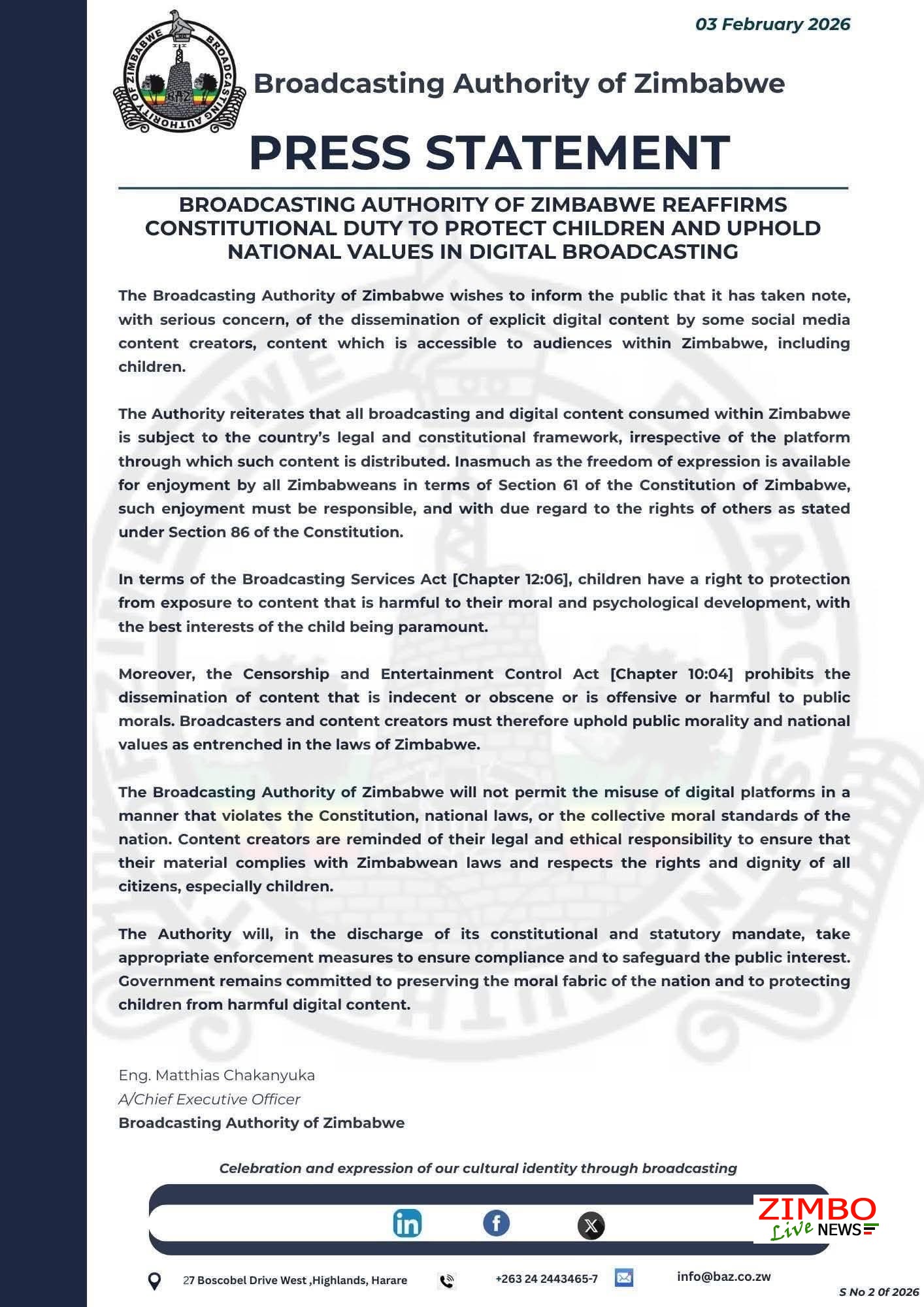
The Broadcasting Authority of Zimbabwe (BAZ) has raised serious concern over the spread of explicit digital content by some social media creators, which is accessible to audiences in Zimbabwe, including children.

BAZ reminds all content creators and broadcasters that all digital content consumed within Zimbabwe is subject to the Constitution and national laws, regardless of platform. While freedom of expression is protected, it must be exercised responsibly and with respect for the rights of others, especially children.

In line with the Broadcasting Services Act and the Censorship and Entertainment Control Act, content that is indecent, obscene, or harmful to public morals is prohibited. The protection of children and the preservation of national values remain paramount.

BAZ will take appropriate enforcement measures to ensure compliance and safeguard the public interest. Content creators are urged to uphold their legal and ethical responsibilities.

  • Share:

Info News

The Evolution of Education in the Digital Era

Education has undergone major changes due to advances in technology and digital learning systems. Traditional classrooms are increasingly being complemented by online learning platforms, virtual classrooms, and educational applications that provide students with flexible access to information and academic resources.

One of the biggest advantages of digital education is accessibility. Students from different parts of the world can access quality educational content through the internet regardless of geographical location. Online courses, video lectures, and digital textbooks allow learners to study at their own pace while balancing work and personal responsibilities.

Technology also supports personalized learning experiences. Artificial intelligence systems can analyze student performance and recommend customized study materials based on individual strengths and weaknesses. Teachers use digital tools to simplify grading, improve communication, and enhance classroom engagement.

However, digital education also presents challenges. Limited internet access and lack of digital devices remain barriers for many students, particularly in developing countries. Excessive screen time and reduced face-to-face interaction can also affect learning experiences and social development.

Despite these challenges, experts believe technology will continue transforming education globally. Investments in digital infrastructure, teacher training, and online learning systems are expected to improve educational opportunities and support future workforce development.

Globalization and Its Impact on World Economies

Globalization refers to the increasing interconnectedness of countries through trade, technology, communication, and cultural exchange. Advances in transportation, internet technology, and international business have accelerated globalization, allowing goods, services, and information to move more freely across borders.

One major advantage of globalization is economic growth. International trade allows countries to access larger markets, attract foreign investment, and create employment opportunities. Businesses can source materials and labor from different countries while consumers benefit from greater product variety and competitive pricing.

Technology has played a major role in globalization by enabling instant communication and digital commerce. Companies can operate internationally using cloud computing, online marketing, and global supply chain systems. Social media and streaming platforms have also contributed to cultural exchange and international collaboration.

However, globalization also creates challenges such as economic inequality, environmental concerns, and job displacement in certain industries. Some critics argue that multinational corporations may exploit low-cost labor markets while weakening local industries. Trade disputes and economic dependence between nations can also create political tensions.

Experts believe globalization will continue shaping international economies and societies in the future. Balancing economic growth, social responsibility, and environmental sustainability remains essential for ensuring globalization benefits people worldwide.